Posted on

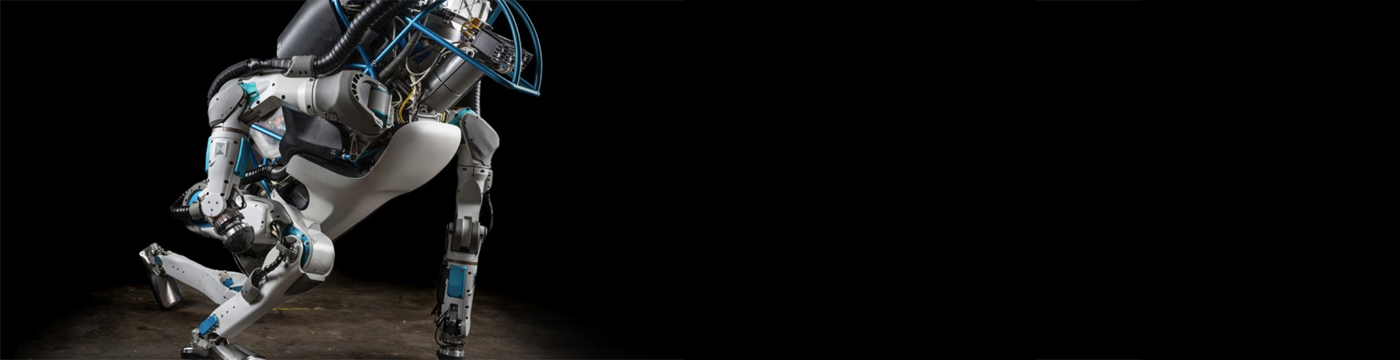
The World’s Most Dynamic Humanoid Robot

The World’s Most Dynamic Humanoid.
Atlas uses balance and whole-body skills to achieve two-handed mobile manipulation.


Atlas is the latest in a line of advanced humanoid robots we are developing. Atlas’ control system coordinates motions of the arms, torso and legs to achieve whole-body mobile manipulation, greatly expanding its reach and workspace. Atlas’ ability to balance while performing tasks allows it to work in a large volume while occupying only a small footprint.

The Atlas hardware takes advantage of 3D printing to save weight and space, resulting in a remarkable compact robot with high strength-to-weight ratio and a dramatically large workspace. Stereo vision, range sensing and other sensors give Atlas the ability to manipulate objects in its environment and to travel on rough terrain. Atlas keeps its balance when jostled or pushed and can get up if it tips over.

By Boston Dynamics
Posted on

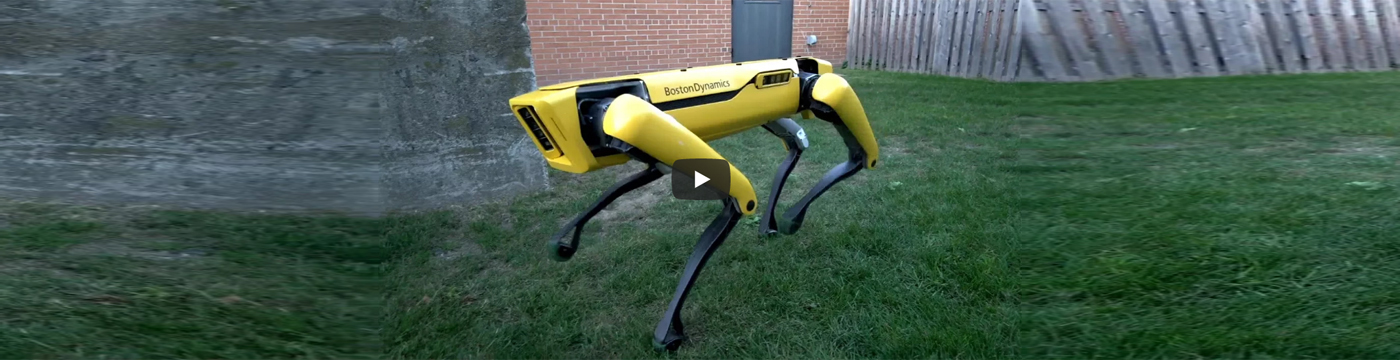
A nimble Robot that handles objects, climbs stairs, and will operate in offices, homes and outdoors

A nimble robot that handles objects, climbs stairs, and will operate in offices, homes and outdoors.


SpotMini is a small four-legged robot that comfortably fits in an office or home. It weighs 25 kg (30 kg if you include the arm). SpotMini is all-electric and can go for about 90 minutes on a charge, depending on what it is doing. SpotMini is the quietest robot we have built.


SpotMini inherits all of the mobility of its bigger brother, Spot, while adding the ability to pick up and handle objects using its 5 degree-of-freedom arm and beefed up perception sensors. The sensor suite includes stereo cameras, depth cameras, an IMU, and position/force sensors in the limbs. These sensors help with navigation and mobile manipulation.

By Boston Dynamics

Posted on

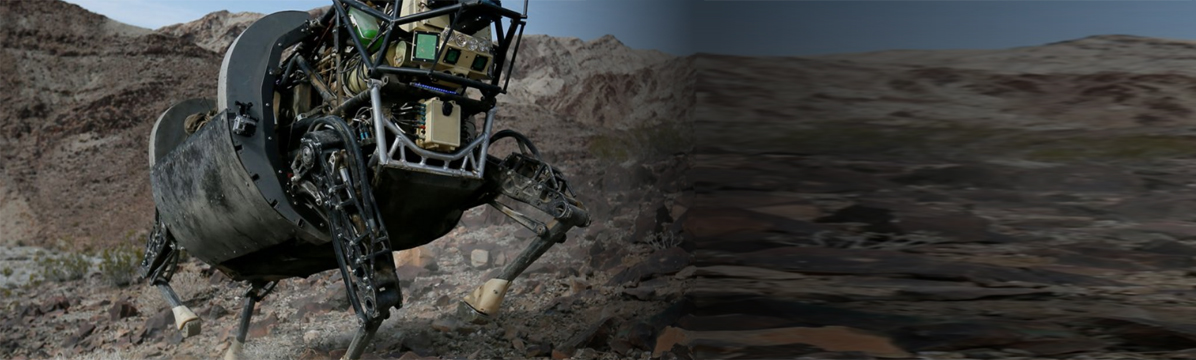
A Robot with Legged Squad Support Systems

A Robot with Legged Squad Support Systems

LS3 was funded by DARPA and the US Marine Corps. Boston Dynamics assembled an extraordinary team to develop the LS3, including engineers and scientists from Boston Dynamics, Carnegie Mellon, the Jet Propulsion Laboratory, Bell Helicopter, AAI Corporation, and Woodward HRT.


LS3 was designed to go anywhere Marines and soldiers go on foot, helping carry their load. LS3 carries 182 kg of gear and enough fuel for a 32 km mission lasting 24 hours. (In one test on flat terrain LS3 carried over 500 kg of payload.) LS3 automatically follows its leader using computer vision, so it does not need a dedicated driver. It also travels to designated locations using terrain sensing, obstacle avoidance and GPS.