
Electrochemical Marking and Etching Machine EUmark Set 01
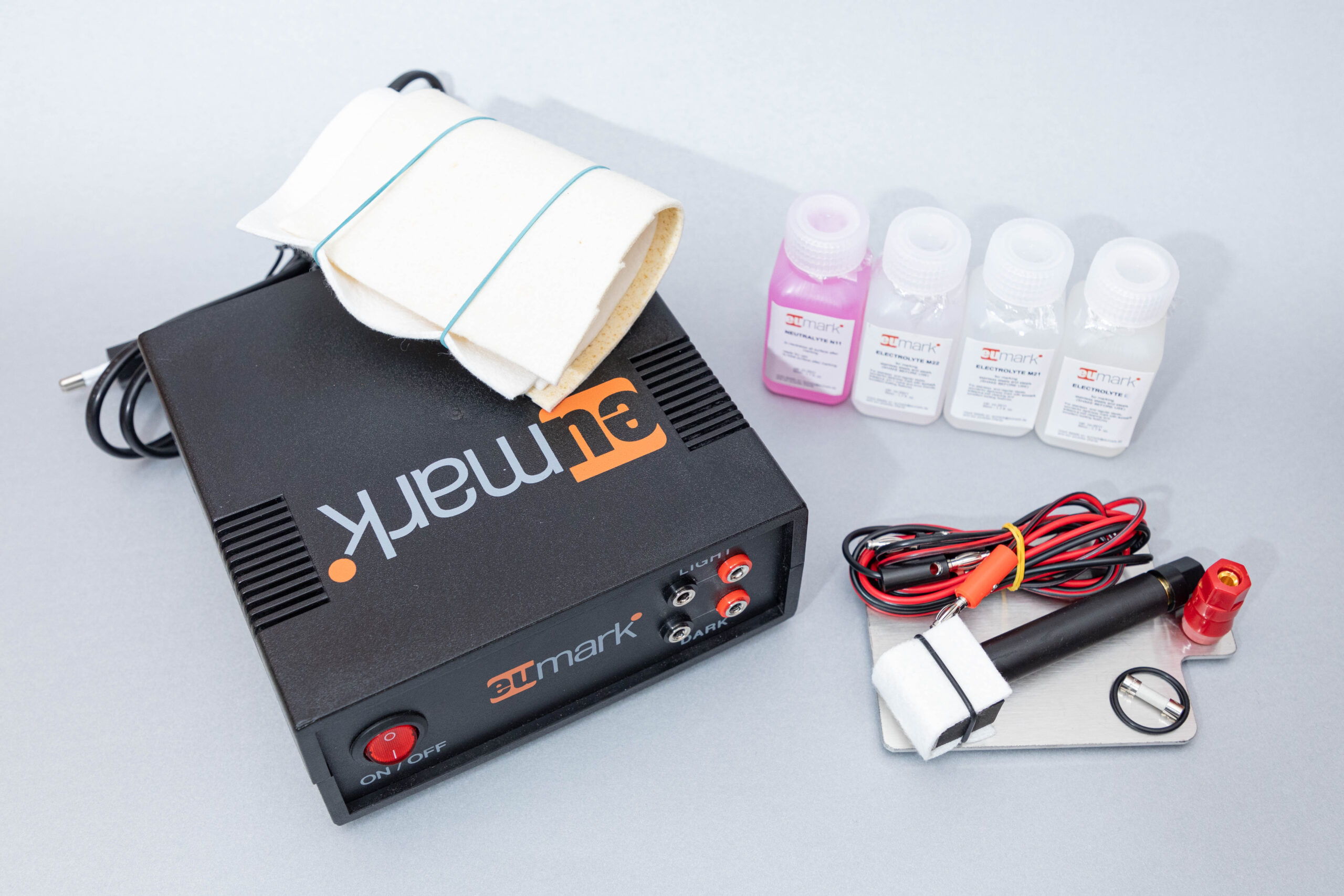
Mark and Etch Metal Surface Fast and Easy! With electrochemical marking, you can label your products in just a few seconds, whether you’re making knives, tools, or machine parts for the aerospace industry. Quick and easy to mark the metal surface with your custom logo text, etc. 110/220V is protected by a fuse and a thermal fuse. Please contact us if you need long-lasting photo stencils or quick, inexpensive ones. EUmark Set01 contains Machine, cables, hand stamp, marking felt file, electrolyte M21, M22, M23, Neutralyte, sample long-life stencil, and quick stencil from the stencil printer.
- What is electrochemical marking? Electrochemical marking is an electrochemical etching of metal surfaces using a small amount of electric current, an electrolyte, a marker with a pad to hold the electrolyte and carry the current, and a stencil with the required image.
- Mark and Etch Metal Surfaces Fast and Easy: Whether you’re making knives, tools, or machine parts for the aerospace industry, electrochemical marking lets you mark and label your products in just a few seconds.
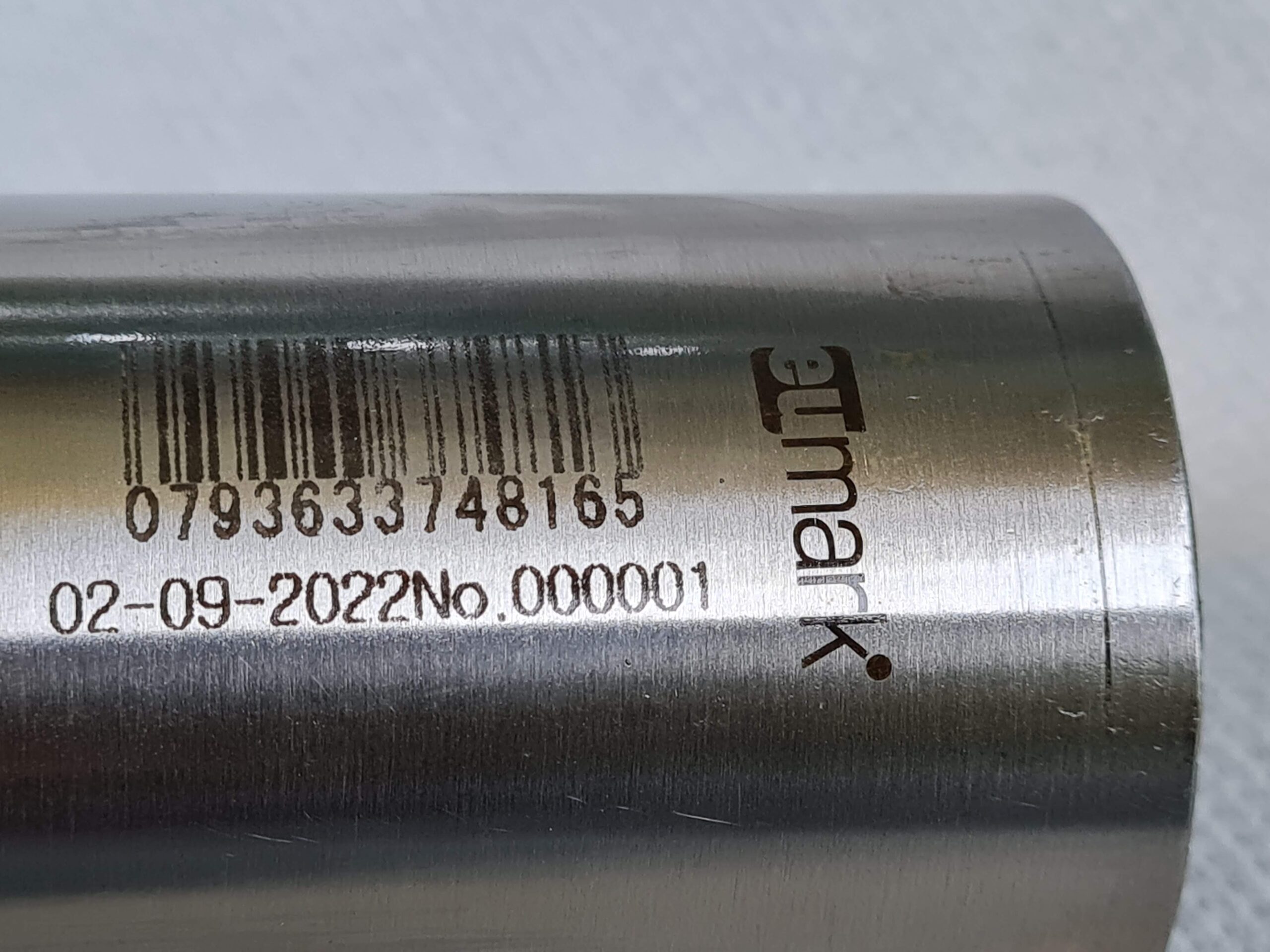
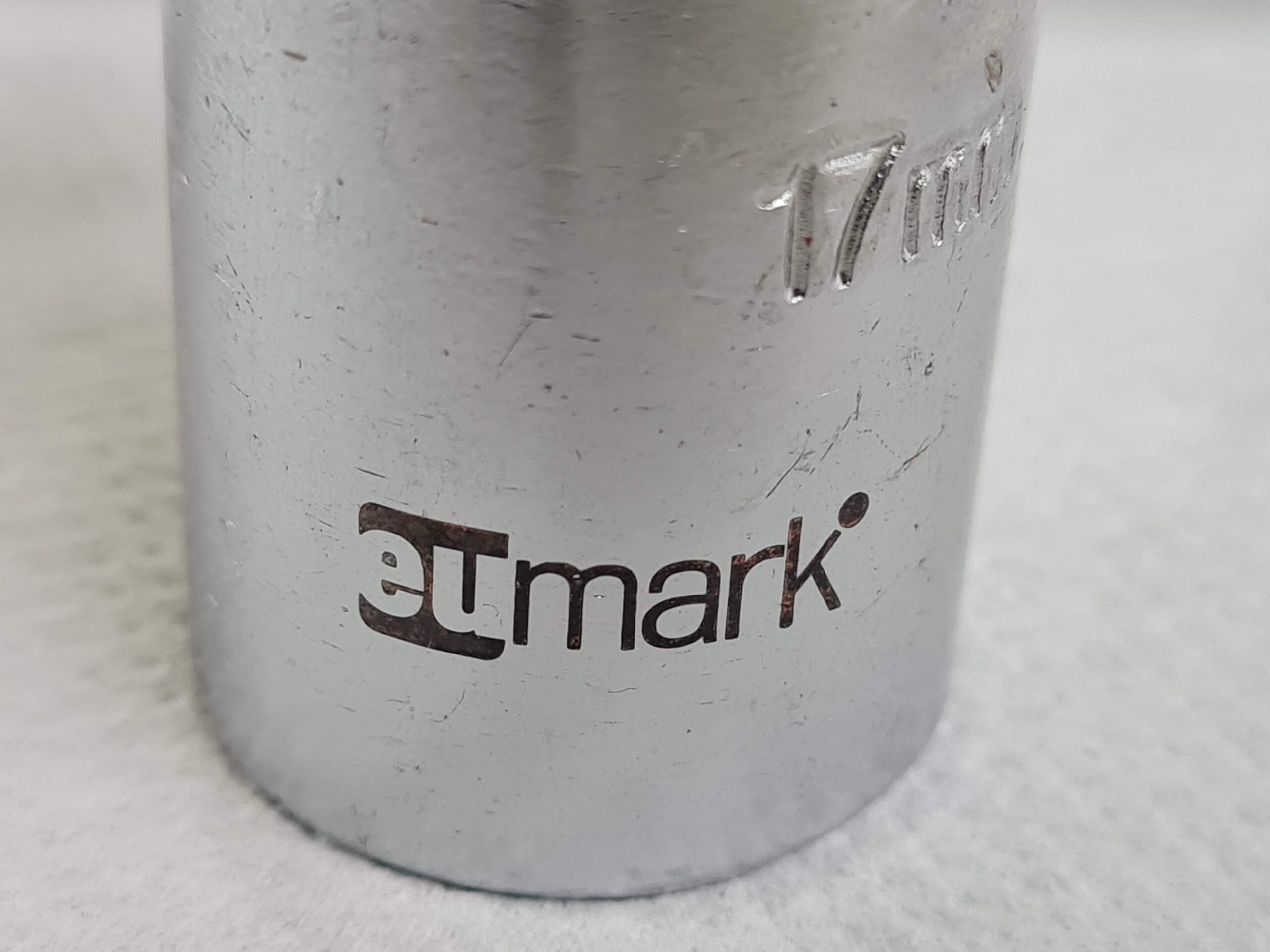
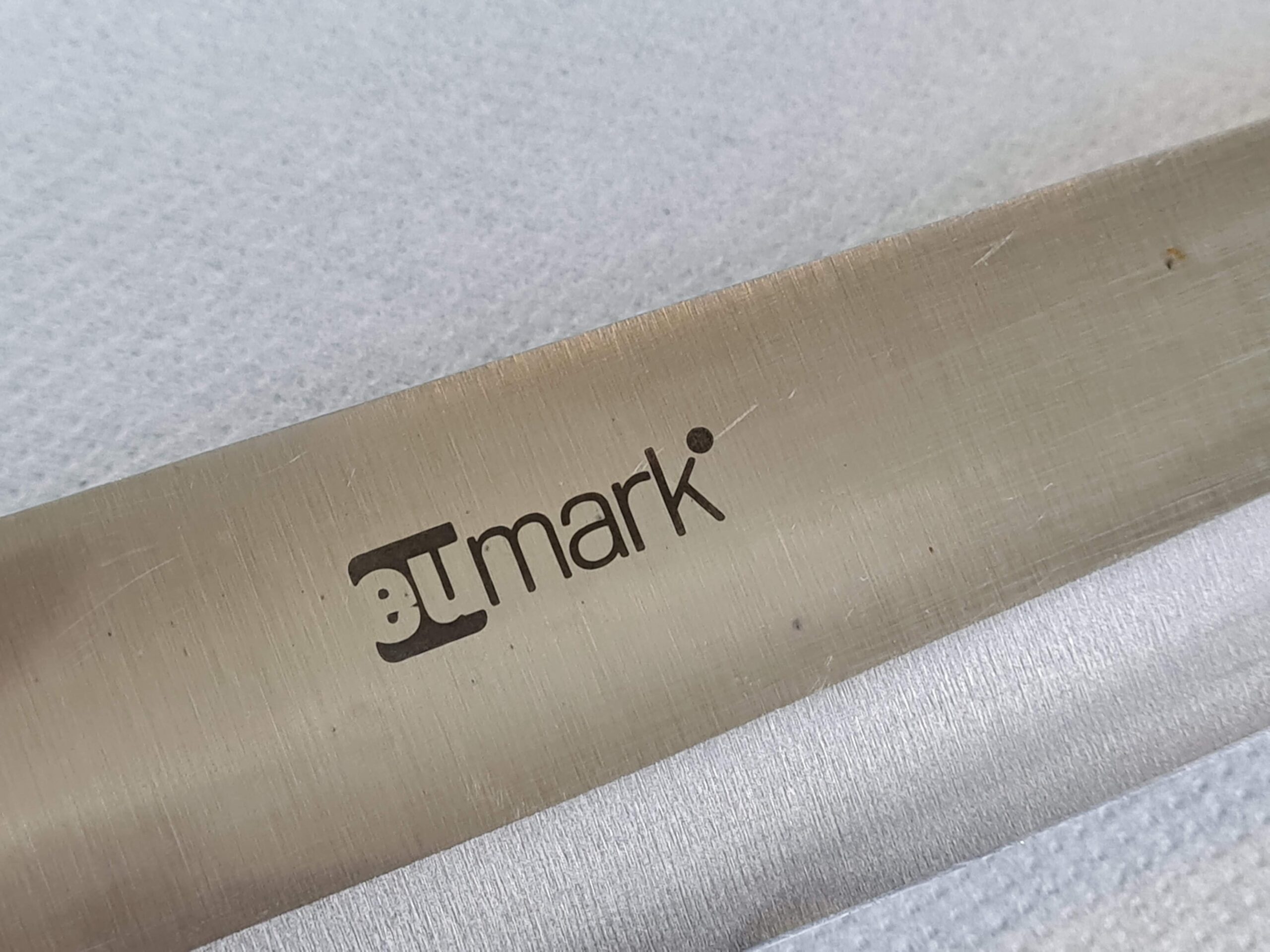
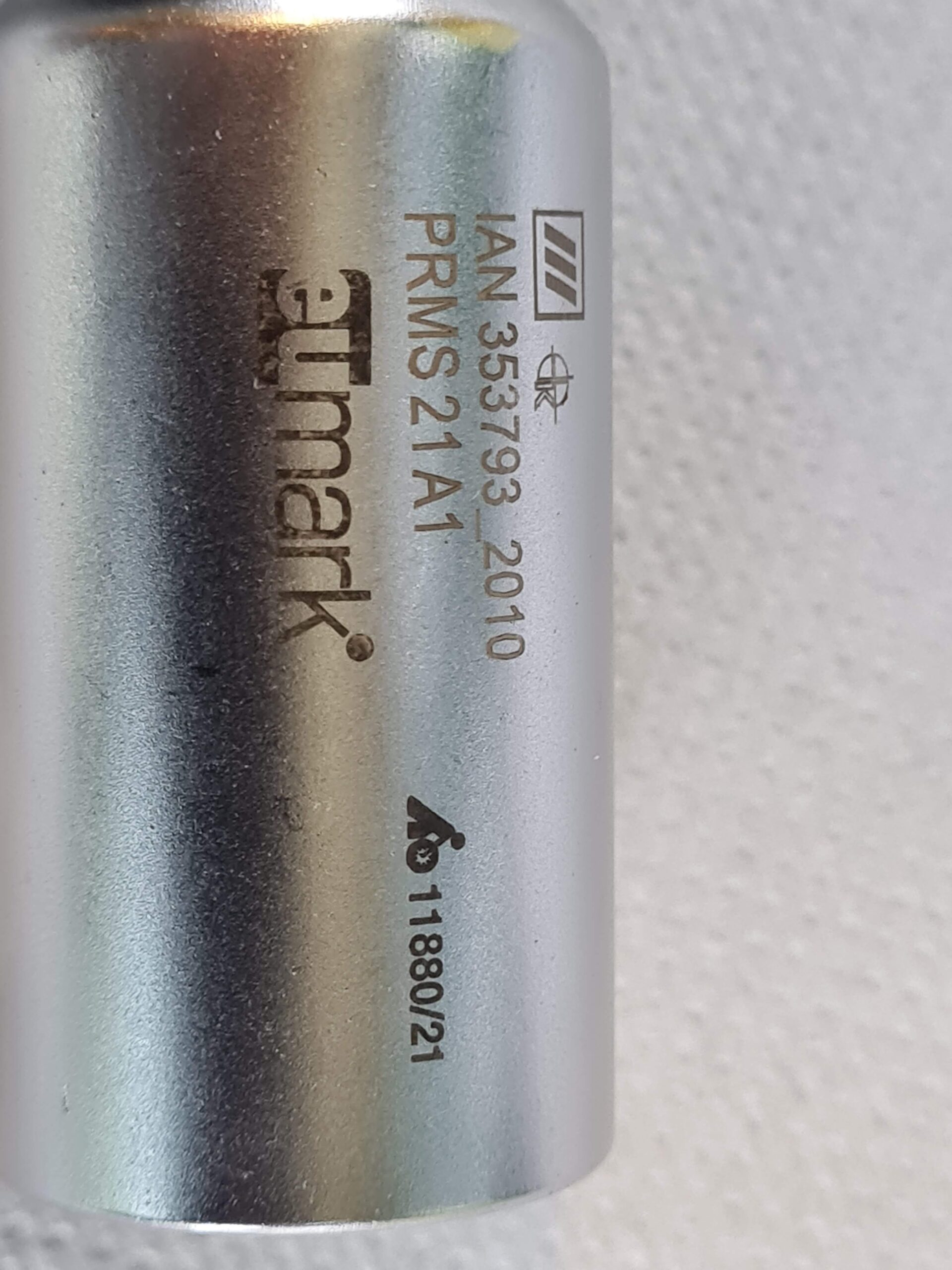
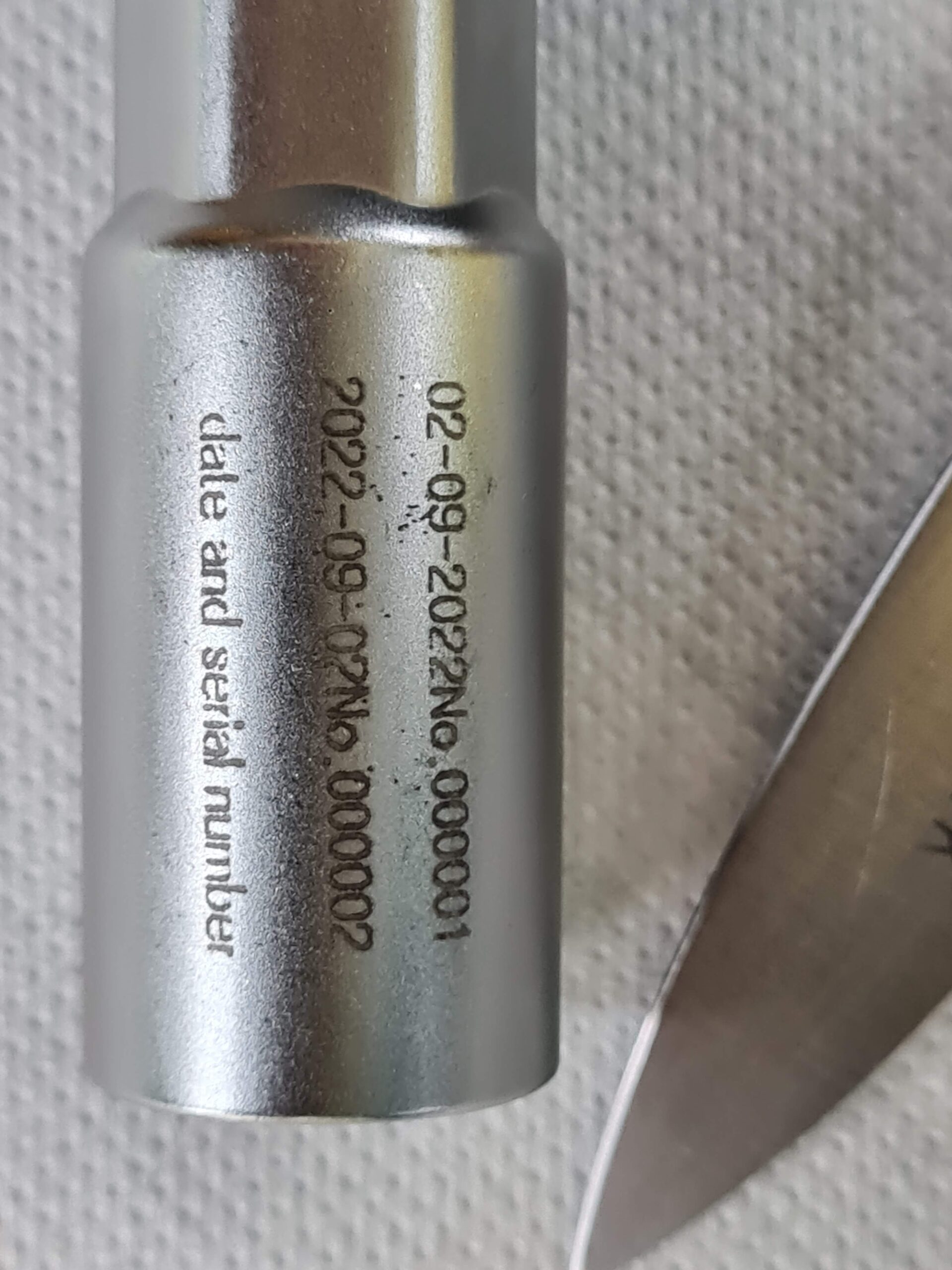
- What is electrochemical marking/etching? Electrochemical marking is the fastest method for permanent marking of conductive metal surfaces. It produces a sharp, clean, and attractive mark in just a few seconds without damaging the material.
Mark/etch the metal surfaces in 5 simple steps
- Turn on your EuMark machine.
- Apply the electrolyte to the marker pad
- Place the stencil (mask) with the required design on the metal
- Press the marker pad against the stencil
- Four Seconds later, your desired design is permanently transferred onto your product
Electrochemical marking facts (fast, cheap, simple, safe, and high-quality): Electrochemical marking is the fastest technique for permanently marking conductive metal surfaces. It produces a sharp, clean, attractive, and economic mark without damaging, stressing, or distorting the marked piece. The print is durable and edgeless. There is no corrosion or other adverse effect on the material. The process takes only a few seconds, and the marks are about 0.025 mm deep. Depending on the function and electrolyte selected, you can achieve clear etch marks, black oxide marks, or white marks on chemically blacked components. The piece’s shape can be flat, round, solid, or hollow, assembled or unsealed. The equipment is very reliable and long-lasting, and it suits many industrial needs. The process is straightforward, doesn’t require much space, can be performed during manufacturing or before delivery, doesn’t require any special training, and is very safe.
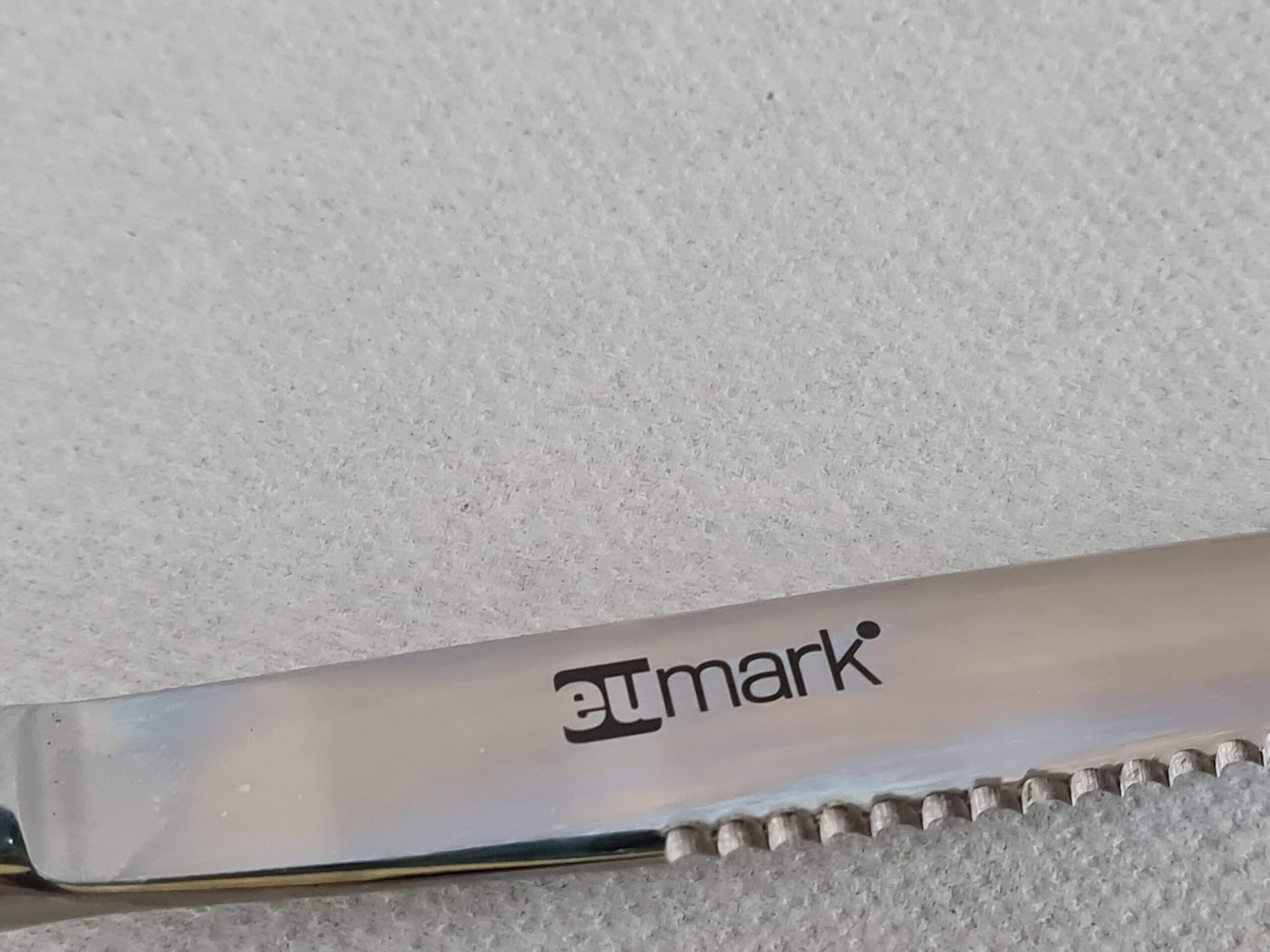
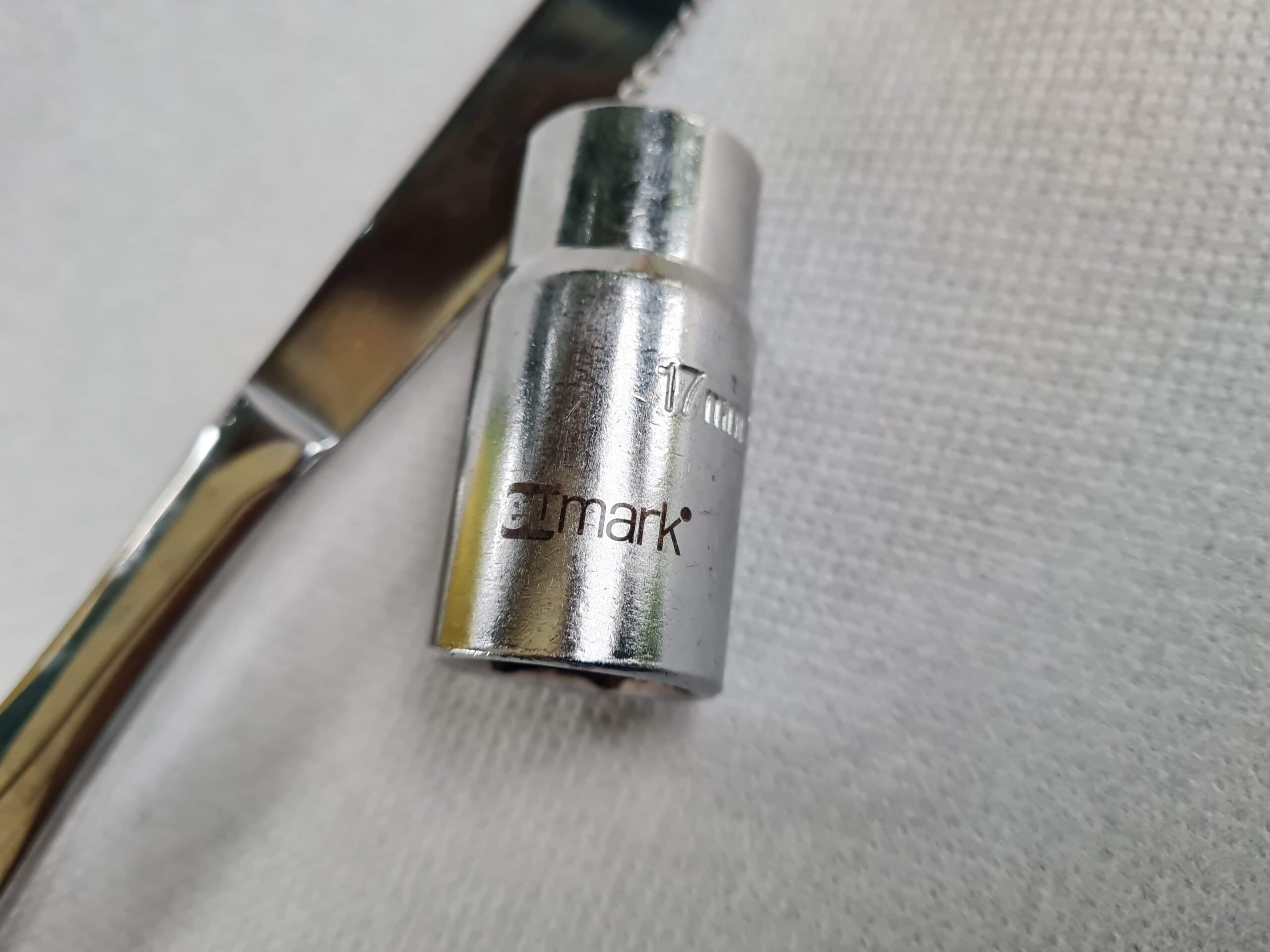
Where can you use electrochemical marking? A wide range of manufacturers use electro-marking. For example, the process is widely used to mark cutlery, tools, taps, drills, saw blades, and components for the automotive and aviation industries. Also, small businesses, hobbyists, and artists can use electro-marking.
Electrochemical Marking Equipment:
- They were marking devices. This unit is available in various sizes and configurations to meet specific needs. The basic models differ in possible operating modes, automatic or semi-automatic controllers, etc.
- Markers with pads can be manual, semi-automatic, and automatic. They are used to hold the stencil, the supply of electrolytes, and to close an electric circuit to be marked.
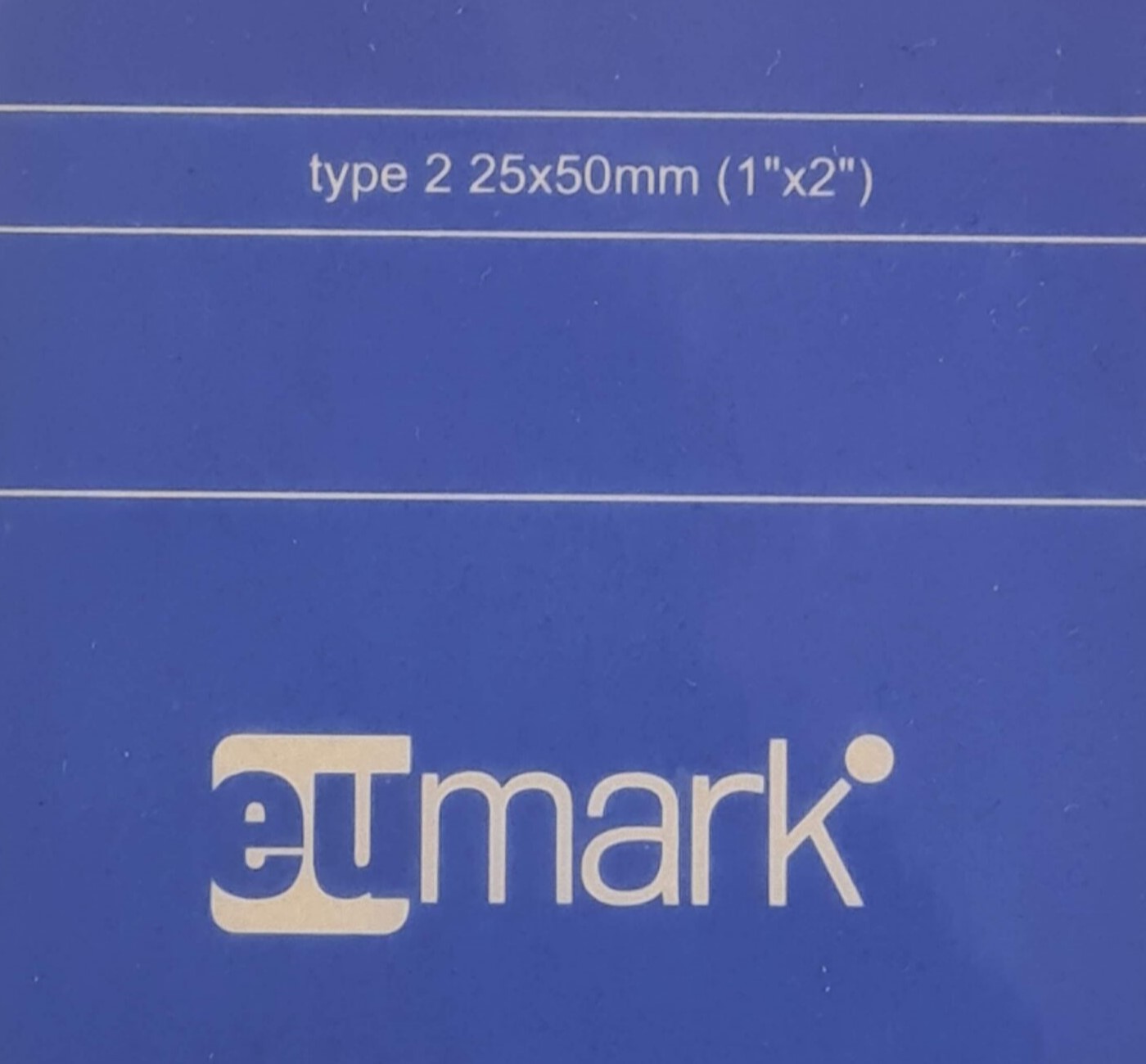
- Stencil: A small, thin piece of a unique material containing the required design. There are two basic models: a long-lasting stencil with high resolution (can be used up to 5000 marks) and a short (fast) stencil for quick marking in small series.
- Electrolyte. These harmless salt solutions are used to conduct current and deliver the necessary chemicals to clear each mark, whether black or white oxide. a. Cleaner: These solutions are used for removing the rest of the electrolyte after the marking to reduce corrosion.





















Reviews
There are no reviews yet.